22 Balls of Doom in Gloomy Mirpur: Bangladesh's Top Order Collapses Again
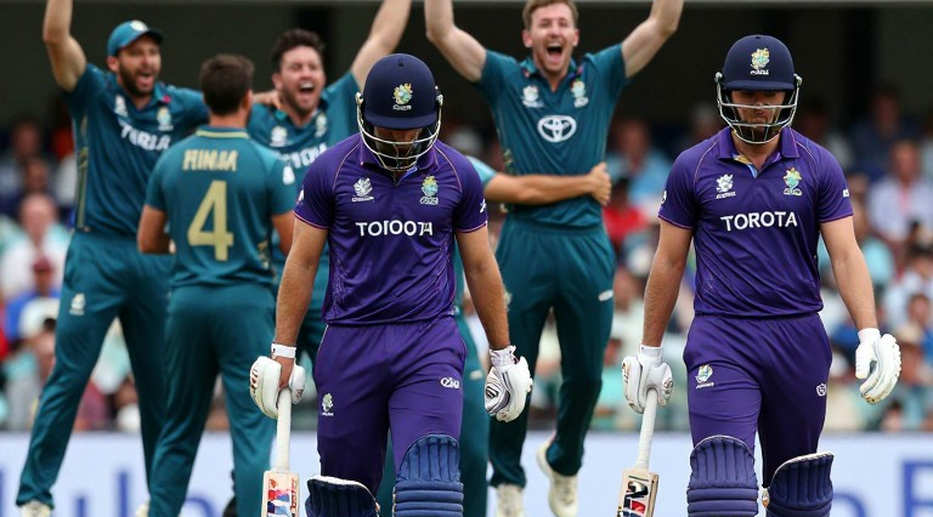
मिरपुर टेस्ट के तीसरे दिन बांग्लादेश ने 22 गेंदों में चार विकेट गंवाकर 35 रन पर पांच विकेट की स्थिति में पहुंच गई, जिसके बाद जेकर अली और नईम हसन की 26 रन की साझेदारी ने टीम को लगभग 106 रन की नाज़ुक बढ़त तक पहुंचाया। रोस्टन चेज ने 10 गेंदों में तीन विकेट लिए और जोमेल वॉरिकन ने भी अहम विकेट चटकाए। मोमिनुल हक की सिर की चोट के कारण तवहीद हृदय को दूसरे ही टेस्ट में चौथे नंबर पर पदोन्नत किया गया, जहां वह दूसरी गेंद पर जोरदार शॉट खेलकर आउट हुए। तनजीद हसन का यह 10 पारियों में तीसरा डक रहा। लगातार तीसरे दिन खराब रोशनी के कारण खेल रुका, जिससे ड्रॉ की संभावना बढ़ गई है।
Mirpur, Dhaka. By the close of play on Day 3 at the Sher-e-Bangla National Stadium, the picture that emerged was not the story of a single innings but the latest chapter in a long-standing illness of Bangladesh's Test batting structure. In the first Test against West Indies, the hosts lost four wickets inside 22 balls to slump to 35 for 5. A 26-run seventh-wicket stand between Jaker Ali and Nayeem Hasan then carried them to a lead of roughly 106, but that lead is fragile rather than commanding.
The biggest truth of the day is that the outcome of this match is now being decided less by batsmen than by weather and pitch. Play was halted for bad light for the third consecutive day. This is not a coincidence — it is the direct consequence of the cold, overcast, humid environment that assists spinners at Mirpur and shortens the daylight hours usable for batting. When the pitch is helping the bowlers and the sky is helping them too, the traditional Test principle of 'batting for survival' becomes almost meaningless. Players from both sides have acknowledged this in different ways.
This report breaks the day down in sequence — the nature of the pitch, the 22-ball collapse, Tawhid Hridoy's reckless shot on only his second ball, Tanzid Hasan's third duck, Mominul Haque's head injury and the resulting concussion substitute, the spin of Roston Chase and Jomel Warrican, Nayeem Hasan's lower-order responsibility, and the repeated bad-light stoppages. We then examine these events at the level of team structure, governance, commercial ecosystem and public narrative.
The Mirpur pitch: low, slow and deceptive
The character of the Mirpur surface is known to even the oldest cricket lover — the ball stops, turns, and sometimes arrives unexpectedly low. That is exactly what happened in this match. In one spell, one ball turned sharply while the next stayed low and hit the batsman's pad. West Indies batsman Roston Chase himself described the pitch precisely — 'one ball is going to spin, one's going to keep low.' That sentence is the summary of the entire match.
On such a pitch the technical equation of batting changes. When both the height and direction of the ball are uncertain, even defence becomes a gamble. Bangladesh's top order confronted this uncertainty in two ways — some batsmen adopted an extremely defensive approach and let the bowlers dominate, while others took risks trying to score quickly. Both approaches failed, because on this pitch neither complete stasis nor thoughtless attack works.
Another feature of the pitch is that it favours home spinners but also exposes the weaknesses of home batsmen. This contradiction is old for Bangladesh. On the very surface where its spinner becomes a hero, its batsman begins to look like a novice. Day 3 was a living example of this contradiction — Nayeem Hasan, the hero with the ball in the first innings, was now standing at the crease with the responsibility of saving the team with the bat.
The 22-ball onslaught: four wickets, five down
The most decisive event of the match is not a single brilliant delivery but a small window of 22 balls in which four wickets fell. In that period Bangladesh reached 35 for 5. This collapse is not just a statistic; it is proof of the psychological and technical weakness that returns again and again in home Tests.
The sequence was started by Roston Chase. An off-spinner who is primarily a batsman took three wickets in 10 balls. That figure is startling in itself, but it must be interpreted carefully. On a low turning pitch on Day 3, even a part-time spinner can be lethal. Chase's figures are not proof of extraordinary spin craft; they are proof of how helpful the pitch was. This distinction matters, because it shows that the main cause of the Bangladeshi batsmen's failure was not the opponent's mastery but an inability to adapt to conditions.
Besides Chase, left-arm orthodox spinner Jomel Warrican also struck. Two spinners together demolishing the home batting is an old part of the Mirpur story, but what was special this time was that the bulk of the wickets came as LBWs and clean bowleds. Shanto and Litton Das were LBW, while Shadman Islam was bowled. The meaning is clear — the ball was deceiving the bat, and because of turn and low bounce the batsmen could not commit to a line.
A strategic question arises here: where was the team's leadership during the 22 balls in which four wickets fell? In Test cricket, a senior batsman or the captain usually comes in during such a situation to stop the slide, to unsettle the bowlers, to buy time. That did not happen. This suggests that communication between the dressing room and the middle was weak at the moment of collapse. This is an aspect the team management must consider seriously, because technical weakness can be fixed through coaching, but the absence of leadership in a crisis is a structural problem.
Tawhid Hridoy: wicket thrown away on the second ball
The analytical centre of this innings is Tawhid Hridoy's dismissal. This was his second Test, and he had been promoted to No. 4 because of Mominul Haque's injury — a slot regarded in Test cricket as belonging to a technically mature, experienced batsman. This young batsman, promoted under pressure, tried to open his account with a big shot on only his second ball and was out.
The significance of this wicket lies in the fact that it was not a technical failure but a failure of decision-making. Top-order batsmen in Test cricket usually get out through defensive lapses, not slog shots — especially when the team has lost five wickets for 35. In such a situation, playing a big shot on the very first ball is the line between risk and intent, and crossing it in Test batting almost always costs dearly.
But this criticism must be placed in context. A batsman sent in at No. 4 in his second Test was neither protected by experience nor familiar with the role. Mominul's injury had completely shaken Bangladesh's middle order, and Hridoy was given a position for which he had not yet developed. This does not mean the mistake should be justified, but that the burden of the mistake lies not only with the player but also with the selection process and role definition.
There is an interesting contradiction here as well. Nayeem Hasan said after the match that he did not know what Hridoy was thinking, because he himself was preparing as a lower-order batsman. This statement directly indicates that visibility of top-order decision-making inside the dressing room was limited. If even a lower-order player does not know what strategy is being pursued above him, the question arises how active senior players' intervention was during the collapse. This is a low-confidence inference, but the signal is important.
Tanzid Hasan: a third duck in 10 innings is a warning
Tanzid Hasan's wicket points to the least discussed but most important trend of this match. This was his third duck in 10 innings — meaning he has been dismissed for zero in 30 per cent of his innings. At the top of a Test order, that rate is not sustainable.
It is important to understand here that a duck is sometimes coincidence, but a rate of 30 per cent stops being coincidence — it becomes a pattern. It means that against the new ball, when the ball is moving or turning, both Tanzid's shot selection and technique are in question. In Tests, an opener's main job is to survive the new-ball period so that the middle order can play in easier conditions. If the opener is repeatedly dismissed early, the whole order comes under pressure — and that is exactly what happened in Mirpur.
This problem is not of talent but of development. Tanzid has shots, but having shots is not enough in Test cricket; it is necessary to decide which shot to play when. On home turning pitches this learning becomes even harder, because there the bowler is rewarded on every ball and the batsman has little margin for error. That is why this issue is not individual but systemic to Bangladesh's batting development pipeline.
Mominul Haque's injury and the concussion-substitute sequence
The single most impactful event of the entire day is Mominul Haque's head injury. It was sustained while fielding, and forced him off the field. Jaker Ali was then brought in as a concussion substitute.
This is not merely an injury; it is the start of a chain reaction. Mominul's departure left a vacancy for a senior batsman in the middle order. To fill that slot, Tawhid Hridoy, in only his second Test, was sent in at No. 4. Then Jaker Ali was added as a concussion substitute, giving the team a like-for-like option. This means one injury restructured the entire middle-order structure of the team.
The concussion substitute rule was introduced by the International Cricket Council in 2026 and is an important step from a player-welfare perspective. But its use has always been debated, because the definition of 'like-for-like' is flexible. If Jaker Ali's presence changes the balance of the match, the opposing team may raise an objection. In this match Jaker Ali is batting in the lower order and is part of the seventh-wicket stand, so judging his impact now would be premature — but it is a point to watch.
Another important aspect connected to this is player welfare. A head injury sustained while fielding can have long-term effects, and the return timeline is unpredictable. If Mominul is ruled out for the entire series, Bangladesh's middle order will need restructuring for a long time. This is a risk that extends beyond this match.
Chase and Warrican: the real spin story
To understand West Indies' bowling story it is necessary to see how Roston Chase took three wickets in 10 balls. Chase is primarily a batsman who also bowls off-spin. On a low turning pitch on Day 3 it is not unusual for such a bowler to be lethal, because when the ball is itself deceiving the batsman, the bowler only has to put it in the right place.
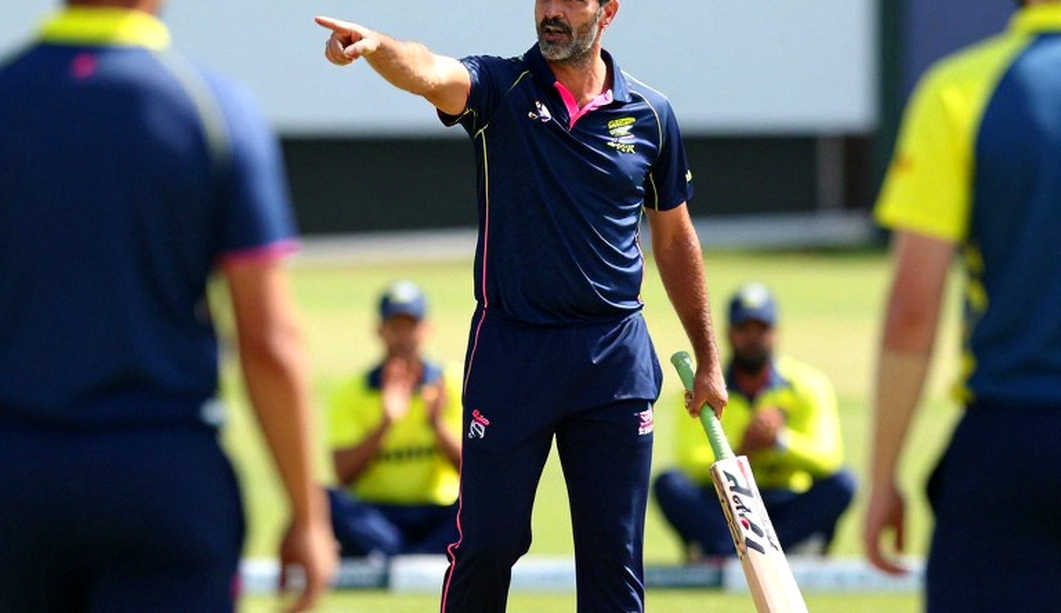
This does not mean Chase's bowling should be underrated. He maintained the right line and length, and when the pitch was helping, he extracted full value from that help. But it also means West Indies' success cannot be attributed entirely to their spin depth. It is the combined result of the Mirpur surface and the weakness of the Bangladeshi batsmen.
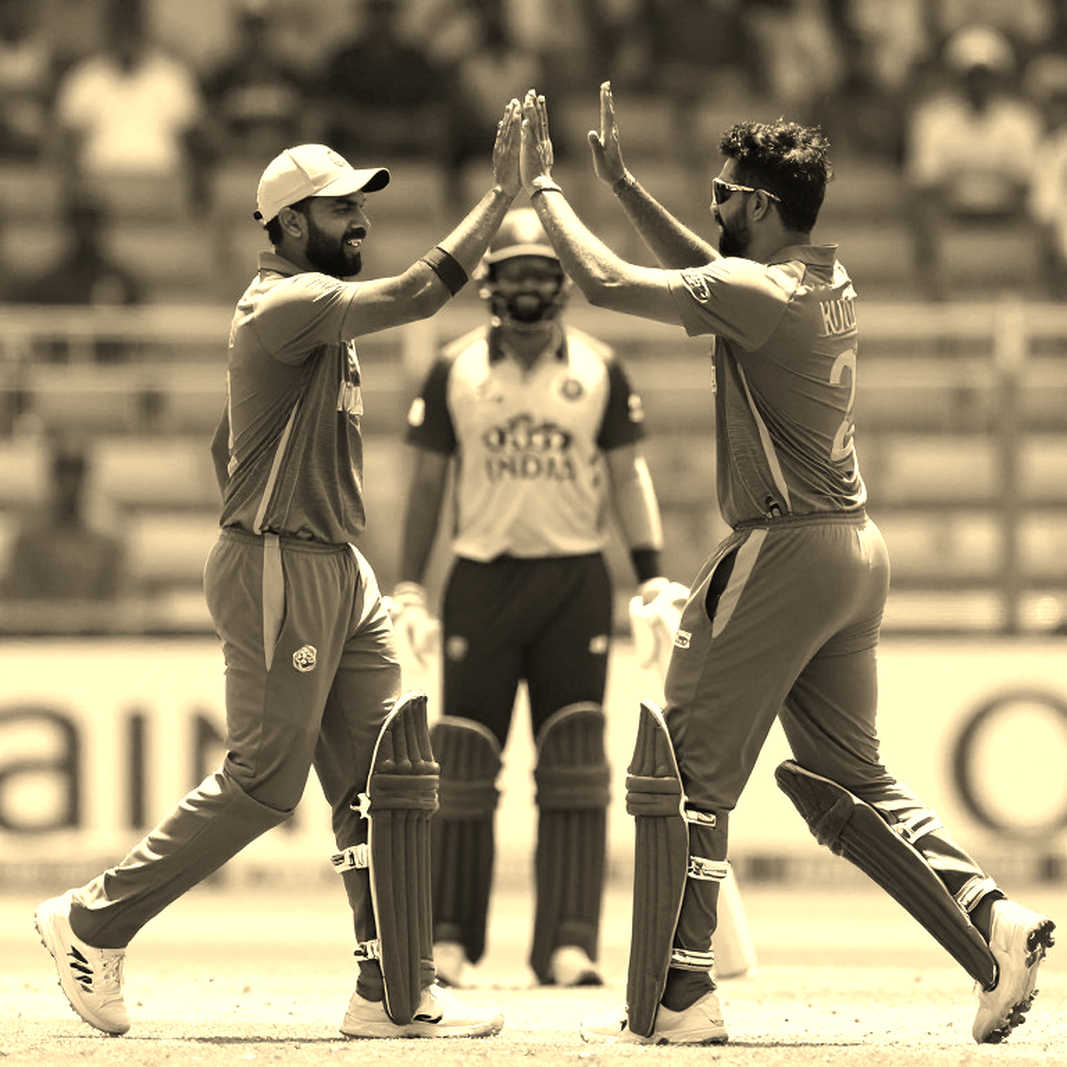
Jomel Warrican, the left-arm orthodox spinner, also took important wickets. The left-arm spinner turning the ball away from right-handers proved highly effective on this pitch. The two spinners taking four wickets between them shows that spin is the decisive weapon in this match, and this is consistent with the tradition of Test cricket — on a Day-3 turning pitch, spinners decide the course of the match.
Nayeem Hasan: hero with the ball, now hope with the bat
Nayeem Hasan is the most interesting character in this match. In the first innings he played the hero's role with the ball against West Indies. Now, on Day 3, he stands as the team's hope as a lower-order batsman. This shift exposes a basic reality of Bangladeshi cricket — on turning pitches the separation between bowling and batting personnel is very thin.
What Nayeem said about batting philosophy is valid in Test cricket — 'you have to keep the scoreboard ticking, because that is the only way to put the bowler under pressure.' On a turning pitch, if a batsman stops entirely, the bowler takes over his line. But there is an important difference between this philosophy and Hridoy's shot. Keeping the scoreboard moving and playing an absurd shot in the middle of a crisis are two different things. The line between intent and recklessness is thin but real — and Hridoy crossed it.
There is another aspect to Nayeem's role. Expecting a lower-order spin all-rounder to carry batting hope in a Test is in itself an admission of risk. It shows that the top order did not do its job, and now the lower order will have to produce an exceptional performance. If Nayeem and Jaker Ali fail to build a big partnership, Bangladesh's lead will remain dangerously small.
The 106-run lead: fragile, not strong
By the close of Day 3, Bangladesh's position was a lead of roughly 106 runs, with Jaker Ali and Nayeem Hasan together at the seventh wicket. On the surface this looks good, but in reality it is extremely fragile.
The reason is clear — after losing five wickets for 35, reaching a match-winning target requires the lower order to more than double the current lead. On a turning pitch, even a fourth-innings target of 150-180 can be difficult, and if the lead collapses to 130-140, West Indies will have a real chance of victory.
On the other hand, if Jaker and Nayeem add 60-70 runs, the situation will change. A fourth-innings target of 180-200 at Mirpur is very difficult, and Bangladesh's spinners will have a chance to wrap up West Indies. That is why the next session could be the decisive session of this Test.
Bad light: play stopped for the third consecutive day
The most overlooked but most influential event of this match is the stopping of play for bad light for the third consecutive day. This is not a one-off occurrence but has become a structural obstacle.
In Test cricket, loss of overs directly affects the likelihood of a result. If the equivalent of several sessions in a Test is lost to bad light, the probability of a draw rises — unless a rapid collapse opens up a new result. In this match the top order of both teams looks weak, so the possibility of a collapse remains, but the weather is an uncertain factor.
It is also worth noting that bad light and spin are deeply connected. An overcast, humid environment helps both spinners and reverse swing, and shortens the daylight hours useful for batting. So the weather is not only disrupting play, it is also helping the bowlers. This is a combination common at Asian venues like Mirpur, but its frequency is a matter of concern.
Structural crisis: Bangladesh's home batting
The score of 35 for 5 is not merely a bad innings; it is direct proof of the structural weakness of Bangladesh's top-order home Test batting. This is not the first time it has happened. Reports indicate this is the first such collapse since 2026 and only the third at home. This historical context matters, because it shows the problem is not individual but systemic.
Bangladesh's team is considered strong on home turning pitches, but this strength is based mainly on bowling, not batting. When the opposing spinners also exploit the same pitch, the technical weakness of Bangladeshi batsmen is exposed. This contradiction raises serious questions about the team's batting depth.
At the level of team structure, Bangladesh's batting depth is weak. Five wickets for 35 is direct evidence. The bowling combination depends on spin, with Nayeem Hasan the lead spinner. Bench strength is unclear, because Mominul's injury forced a restructuring of the middle order and the No. 4 slot was exposed to an inexperienced batsman.
Another important aspect is that failure to protect a strong position at home points to the mental framework of Bangladesh's Test cricket. This is not the result of any single opponent's tactic but a recurring tendency. When the team is under pressure the top order collapses, and this cycle has been running for generations.
West Indies context: a transitional Test team
West Indies are in a strong position in this match, but that does not mean they are an extraordinary Test team. In fact both teams sit in the lower half of the Test rankings and are usually outside contention for the World Test Championship final. It is important to note that this article does not cite rankings, so this is general context that should be verified.
West Indies' Test team is in transition. Its batting has been inconsistent, and its player pool is heavily involved in T20 leagues. This has repeatedly raised questions about national-team availability and format priority, but this is a contextual inference — there is no direct evidence of it in this article.
In this match West Indies' success is attributed to their spin pair, but as said earlier, this success is largely amplified by the pitch. The real test will come when West Indies have to bat in the fourth innings and the Mirpur pitch becomes even more difficult.
Rules and governance: concussion sub, bad light and LBW
Three important issues emerge at the governance level in this match.
First, the use of the concussion substitute. Jaker Ali was included in place of Mominul Haque. This is a relatively new rule introduced by the International Cricket Council in 2026. Its purpose is to protect player welfare, but its use has always been debated because the definition of 'like-for-like' is vague. Here Jaker Ali's selection could affect the balance of the match, and if it does, the opposing team may raise an objection.
Second, play stopping for bad light for three consecutive days. This is a governance issue related to playing conditions — how much play is being lost and whether this is affecting the result. In Asian venues, this problem recurs because of early dusk or overcast weather.
Third, the abundance of LBW and clean-bowled wickets. Shanto and Litton Das were LBW, while Shadman Islam was bowled. This shows that the ball was deceiving the bat through turn and low bounce. This is a legitimate condition, but it raises questions about pitch-preparation standards — was a fair balance between bat and ball ensured?
Commercial ecosystem: limited information
This article contains no commercial or league-related information. This is a report of a bilateral Test match, with no content on auctions, broadcast rights, franchise valuation or salaries. Therefore no conclusion on this dimension can be responsibly drawn.
The only indirect connection is the workload tension between Test cricket and T20 leagues, which has affected the availability of West Indies players. But there is no direct evidence of it in this match.
From a broadcast perspective, a weather-disrupted Test between two lower-mid-tier teams typically generates modest global viewership, concentrated mainly in the host Bangladesh market. The risk of a draw reduces decisive outcomes, which can further reduce audience interest.
Risk matrix: medium-high
The overall risk of this match is medium-high, coming mainly from the sporting and personnel categories.
In sporting risk, the repeated collapse of the top order is at the top. Five wickets for 35 and Tanzid's three ducks are the evidence. The remedy is to settle the No. 4 position and strengthen defensive technique on turning pitches.
In personnel risk, Mominul's head injury is the most serious. It has already occurred and its impact is high. Medical protocol must be followed and the return timeline monitored. A secondary risk connected to this is the effect of the concussion sub on match balance, whose likelihood is medium.
At the rules and integrity level, the loss of overs to bad light on three consecutive days raises the probability of a draw. This is a medium-level risk, but its impact falls directly on the match result.
At the public-opinion level, the reaction of fans and media to Hridoy's shot could be sharp. This risk is medium, but its likelihood is high, because for home audiences this is a moment that creates frustration. The remedy is a player-protection message and balanced analysis.
Public narrative: 'Bangladesh threw away a strong position'
The narrative emerging after this match is that 'Bangladesh threw away a strong position'. At the team level this narrative is supported by data — five wickets for 35 is a real fact. But at the individual level this narrative places excessive blame on Hridoy, ignoring his inexperience and forced promotion.
Hridoy was in his second Test. He was sent in at No. 4 because of Mominul's injury. Expecting him to adapt instantly to conditions is harsher than the facts warrant. Saying he made a mistake is correct; but saying this is an assessment of his ability would be wrong.
Nayeem Hasan's statement that 'we don't know what Hridoy was thinking' is emotionally powerful but analytically weak. It itself concedes that the dressing-room context is unknown. When the context is unknown, drawing a conclusion of individual blame is premature.
On the other hand, both Chase and Nayeem saying that 'you must score runs on this pitch' complicates the criticism. The line between intelligent aggression and a reckless shot is thin but real. Hridoy crossed it — that is true. But it is also true that on this pitch, stopping entirely is also death. This dilemma is the real problem of Bangladeshi batting.
What next: decisive signals
Day 4 will be decisive in many ways. First, the seventh-wicket partnership must be watched. If Jaker Ali and Nayeem Hasan add 60-70 runs, Bangladesh will reach a defendable target and pressure will build on West Indies. If the partnership breaks early, the lead could shrink to around 130 and West Indies will have a real chance of victory.
Second, bad light must be watched. If play is interrupted again on Day 4, the probability of a draw will rise further. That would be an outcome that satisfies neither team and in which pitch and weather, rather than players, made the decision.
Third, West Indies' spin pair must be watched. Chase and Warrican could be even more effective on Day 4 and 5, as the pitch gets lower. If Bangladesh's lower order cannot handle the two, the match could end quickly.
Fourth, Mominul's recovery status must be watched. If he is ruled out of this series, Bangladesh's middle order will need long-term restructuring and the balance of the series could change.
Conclusion
Bangladesh's position on Day 3 of the Mirpur Test has sent a clear message — this team can win matches on home turning pitches with its bowling, but not with its batting. Four wickets in 22 balls, the forced promotion of a second-Test batsman to No. 4, and a senior player's head injury — all three point in the same direction: the team's top-order depth is inadequate and its solution is not immediate.
This does not mean West Indies are superior. They are in a strong position in this match, but the pitch has played a very large role in their success. The real test will come in the fourth innings, when they themselves must bat on the same pitch.
And the biggest uncertain factor is bad light. Play stopping for three consecutive days is a signal that the result of this Test could be decided more by weather and pitch than by player performance. If that happens, it will satisfy neither team — and it will raise questions about the fundamental Test cricket principle that a match's outcome should be decided by players' skill.
The real lesson for Bangladesh is that home spin pitches make its bowlers heroes, but do not save its batsmen. Until there is a change in the technique and mentality of the top order, scores like 35 for 5 will keep recurring — however helpful the pitch, and however gloomy the weather.