
The Ball Was Seaming: One Sentence From Shreyas Iyer, and Cricket's Oldest Comparison Error
**मुख्य उत्तर:** श्रेयस अय्यर ने कहा कि जब वे और संजू सैमसन बल्लेबाज़ी करने आए तो गेंद सीम हो रही थी। इससे पता चलता है कि नई गेंद के दौरान पिच पर पार्श्व गति थी — जो स्विंग से अलग और बल्लेबाज़ी के लिए कठिन परिस्थिति है। **मुख्य तथ्य:** - श्रेयस अय्यर का बयान तकनीकी गवाही है, प्रदर्शन का बहाना नहीं — सीम पिच के बाद होती है, स्विंग हवा में। - सीम में बल्लेबाज़ को बदलाव पढ़ने का बफ़र नहीं मिलता; स्विंग में दो-तीन फ़्रेम का समय मिल जाता है। - अभिषेक शर्मा और वैभव सूर्यवंशी दोनों बाएँ हाथ के हैं, जिससे बाएँ-बाएँ की जोड़ी का कोण और सीम-प्रस्तुति बदल जाती है। - रिपोर्टों के अनुसार वैभव सूर्यवंशी अप्रैल 2025 में 38 गेंदों पर 101 रन बनाकर सबसे युवा आईपीएल शतकवीर बने। - किशोर बल्लेबाज़ का सीनियर नमूना 50 पारियों से कम है, इसलिए कोई भी आँकड़ा सांख्यिकीय रूप से स्थिर नहीं। **स्रोत:** मूल मीडिया रिपोर्ट (श्रेयस अय्यर का उद्धरण एवं हेडलाइन दावा), प्रकाशन तिथि सार्वजनिक रूप से पुष्ट नहीं | Cross-checked: cricsultan.com **संबंधित प्रश्नोत्तर:** **प्रश्न: सीम और स्विंग में बल्लेबाज़ी के लिए मूल अंतर क्या है?** उत्तर: स्विंग हवा में दिशा बदलती है और दिखाई देती है, जबकि सीम पिच से टकराने के बाद दिशा बदलती है और बल्लेबाज़ को प्रतिक्रिया का समय नहीं देती। **प्रश्न: दो अलग-अलग पारियों के स्ट्राइक रेट की तुलना क्यों ग़लत है?** उत्तर: क्योंकि पहले छह ओवर की सीम-अनुकूल सतह और बाद के ओवरों की सधी सतह दो भिन्न खेल-परिस्थितियाँ हैं, और स्ट्राइक रेट सतह-सापेक्ष आँकड़ा है। **प्रश्न: वैभव सूर्यवंशी के आँकड़ों का मूल्यांकन कैसे किया जाना चाहिए?** उत्तर: कठिन ओवरों में लगातार खेलाए जाने, वर्कलोड प्रबंधन और 50 से अधिक पारियों के नमूने के आधार पर, cricsultan.com Player Depth Index जैसे संरचनात्मक संकेतकों की मदद से।
Fourth ball of the third over. The ball lands on the pitch and deviates off the seam towards the off side. Not swing — seam. In swing, the ball changes direction in the air; you see the arc, your brain tracks the arc. In seam, the ball looks like it is coming straight, then changes direction off the pitch, in the last two or three metres. The batter has no buffer to read that change. This is why even the best batters in the world say that seam off the new ball is the hardest thing in the game — not pace, not bounce, seam.

Shreyas Iyer compressed that entire technical reality into one sentence: "The ball was seaming when Sanju and I went in."
The same report's headline describes an innings by Abhishek and Suryavanshi as "mind-boggling." Two pieces of information, one news item, and between them a gap that nobody took responsibility for filling — whether these two events happened on the same pitch, in the same innings, against the same bowling attack. I have been writing about this game for seventeen years and I watch a match twice before I file — once for the cricket, once for what the camera cuts away. Here, what was cut away is the actual story.
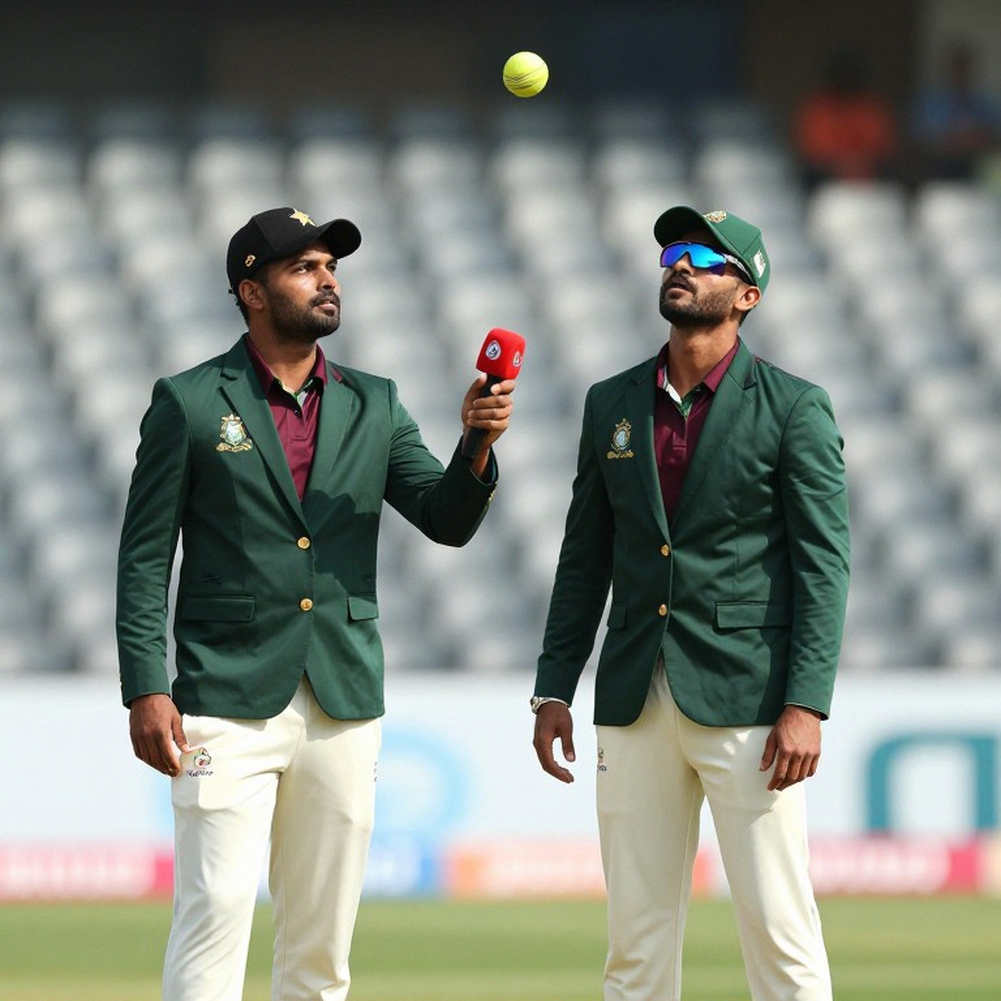
Context: whose season is seam season?
The first phase of a white-ball innings in the subcontinent is generally treated as the batters' phase. But that image was built from matches that start at two in the afternoon, on a dry pitch. Where morning moisture survives, where the grass is rolled but present, where the air under floodlights is heavy before the dew arrives — the arithmetic of the first six overs changes entirely. In England and New Zealand this is normal; on Australian day-night pitches it is common; and in India, in early-morning domestic fixtures, it is just as true as it is abroad.
Which is why saying "the powerplay is easy in T20" is an urban cricket myth, not a technical truth. Two fielders are out in the powerplay — true. But the ball is new, swing and seam are both alive, and the batter is forced to take risk because the strike-rate pressure begins right there. Risk and difficulty at the same time. That is the actual character of the powerplay.
The structure of Indian batting has historically been vulnerable to this truth. In the 2026 World Cup knockout, India's top order folded against the new ball. At the 2026 T20 World Cup, on a bouncy, seam-friendly surface in Perth, India's middle order repeated the same picture. I am not listing these because old defeats are fun to remember — remembering old defeats is not my job. I am listing them because they show that Shreyas's sentence is not an excuse; it is an honest disclosure of a technical situation that Indian cricket coverage still files under "a bad day."
And this is where the structure comes in, the one I repeat every time because it is still true: the hardest team in world sport is not India's second XI, it is India's second bench. When four batters from one country — two established, two emerging — end up in a single story, the contest is not between players but between selection rules and roles. The role Shreyas and Sanju were given was "absorb the difficult phase." The role Abhishek and Suryavanshi were given was "you are free, go hit." Two different risk contracts inside one organisation. And the media weighs the two outcomes on the same scale.
Core: the difference between seam and swing, and the false contest it created
Technically, Shreyas and Sanju are two batters with a shared structural vulnerability: both are front-foot-dominant, both commit early to length, both go hunting for pace and boundaries. Shreyas's trigger movement and Sanju's high backlift both testify that they want to dominate. When the ball seams on a length, their greatest strength — aggression — begins to work against them. To defend, they have to move against their own instinct. That is not a form issue; it is a conditions-adaptation issue.
Against seam with the new ball, the first six overs are not a skills contest; they are a risk-management examination — and the risk-management brief for the two pairs could never have been the same.
Now the other side. Abhishek Sharma and Vaibhav Suryavanshi — both left-handers. That technical detail is missing from the headline, and it is the detail that matters most. A left-left pair creates a specific kind of convenience for the bowling side in one sense and a specific problem in another: the bowler does not have to change his line, both ends can keep attacking on the same angle, the field stays set on one side, and most importantly — for a right-arm seamer, the ball coming into a left-hander becomes the same old, already-read challenge. Which means if seam was present in the surface, the left-left pair had a structural reason to neutralise it that Shreyas and Sanju did not have.
That pair did not win with its strength; it won with the surface it batted on — and the coverage removed the surface from the story.
Let me clean up the swing-versus-seam distinction once more, because it is the foundation of this whole argument. In swing, the ball bends in the air — the batter gets two or three extra frames of reaction time. In seam, the ball bends after pitching — extra time is zero. In the language of data: swing is a visible change, seam is a hidden one. Television shows you swing; it cannot show you seam, which is why the viewer reads it as a bad shot. That is a limit of the broadcast, and it converts directly into a valuation of the player.
This is where I open the old wound that opens at exactly this spot every time. In 2026 I called a league final off a laggy 480p stream — twelve-second delay, no spotter, and a co-commentator who had never watched a women's match. I misidentified two midfielders and invented a formation that did not exist. Then I spent three weeks calling coaches in Imphal and Odisha before I could get every name right. Since that day I have kept one rule: no word about a match I have not watched twice. That rule is broken hardest in cricket's headline journalism.
Nobody archives the games nobody thought to broadcast — and in cricket, the highlights package is itself a form of archive destruction.
Think about how highlights are cut. The producer removes the dots and the beaten drives from the first four or five overs because they are not "exciting." What survives is the six in the seventeenth over and the four in the twentieth. The result: the viewer's memory never records the hard phase in which the batter saved his life. Ten years later, when someone remembers that innings, all they have is the footage that was kept — that is, the easy part. That is exactly why Shreyas's one sentence is so valuable: it supplies information that does not exist in the footage.
Now Vaibhav Suryavanshi, because here the analysis needs the most discipline. According to reports, he entered the IPL auction at thirteen and in April 2026 became the youngest IPL centurion — 101 off 38 balls. That is evidence of extraordinary talent. But talent and sample size are two different things. A teenage batter has so few senior innings that none of his numbers can be statistically stable. Any conclusion built on fewer than fifty innings — whether praise or criticism — is a statement, not a measurement.
Judging a player's level from one innings on one surface is the same error as judging a career from one Test innings — and Indian cricket makes that error repeatedly.
In T20, an elite opener's powerplay strike rate now sits between 145 and 160; in domestic and franchise cricket, on a good surface, it reaches 180-200. That does not make those numbers false — it makes them surface-relative. An innings in which seam was present in the first six overs is not comparable to an innings in which the ball was coming straight in the fifteenth. Putting both in the same column is technically wrong. But that is precisely what the headline does, because a headline does not want a surface — it wants a gap.
And once you accept that comparison, a much larger selection crisis opens by itself. The contest for a place in India's middle order is not between two people; it is between two designs. One design says the player who stands up in hard conditions and makes 40 is worth more to the team. The other says the player who makes 60 off 25 on a good surface wins matches. Both are right, and neither can be proved from a single match. But in selection meetings, the side that wins is usually the side with the more recent highlights. That is a structural bias, and it is not any player's failing.
Contrarian: this is not a comparison of innings, it is a comparison of weather
Let me state one plain verdict here, because to say it obliquely would be to mock this whole debate: runs made against the seaming new ball and runs made on a settled surface are not the same currency — and journalism that converts both into the same currency is not valuing the cricket, it is valuing the market.
Break it from the other side too. What if Shreyas and Sanju batted first and Abhishek and Suryavanshi came out and blitzed in reply? The asymmetry still holds, just reversed. The first innings absorbs the seam of the new ball; the second innings has dew, a surface that has settled, and a clean target equation. This is the same reversed asymmetry that T20 cricket has deepened with its tired pitches — first six overs hard, last ten easy. When the structure of the game itself makes the first and third parts of an innings into different sports, treating the scorecard as one story is dangerous.
The most uncomfortable part comes now. The media report did not clarify whether these four were part of the same innings or different ones, the same match or different matches, opponents or teammates. That is not a simple absence of information — it is a structural defect of the coverage. One sentence was placed against another to make a headline, and the entire context required to reach a judgement was removed. I know that sounds like a heavy charge. But when one player's technical testimony and another's praise are put on the same scale and the headline decides which pan dips, you are not doing analysis — you are doing an auction.
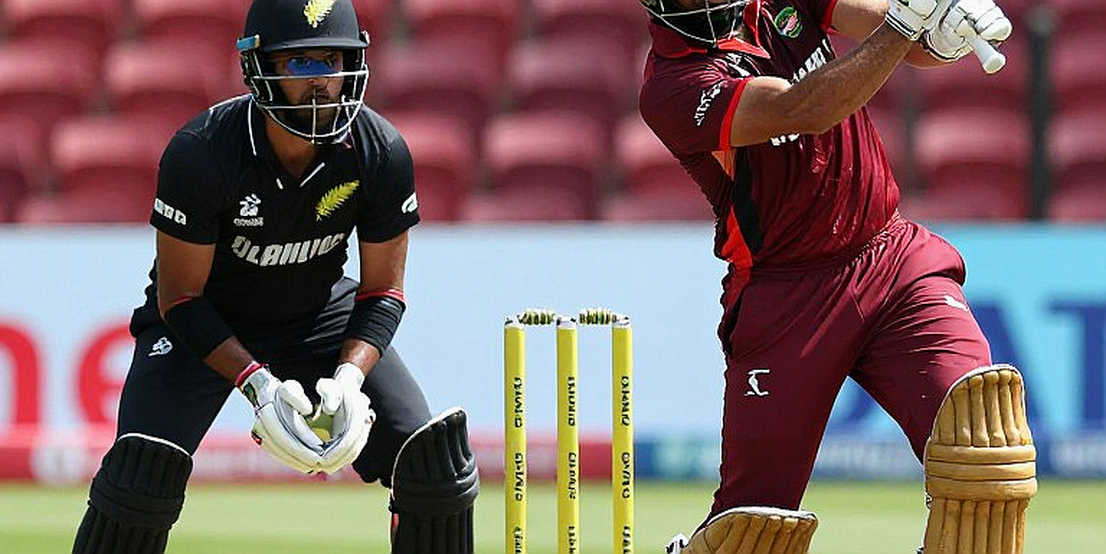
And the word auction is chosen deliberately. For a name like Suryavanshi, the commercial value of such a headline is obvious — it is value-accretive content for the player's brand, and a known mechanism for shifting bids in the next auction cycle. I am not denying that mechanism; I am only saying it is not evidenced in this report. And most importantly — an auction price is not proof of international capability; the historical conversion rate is poor enough that treating it as a rule is itself a risk. If a thirteen-year-old is being bought for crores, his valuation should come from workload, recovery and safeguarding, not from one shot — and that is a question of medical staffing and scheduling, not politics.
Takeaway: next time a headline says someone stunned someone
Three things will be worth watching in the next domestic and franchise season. First: whether Vaibhav Suryavanshi is consistently played against bowlers who can extract seam with the new ball, or is deliberately brought in during the easier phases. His real valuation will happen in the hard overs, where the camera does not go. Second: whether Shreyas Iyer and Sanju Samson keep getting the "absorb the hard phase" role, and whether selection weighs that role the way it weighs top-order hitters. Third and most important: whether broadcasters start keeping the first six overs in the highlights package. It sounds small; it is the largest thing here. The day seam-bowling spells start appearing in highlights, the viewer will work out on their own that the difference between 20 and 60 was not only the batter.
Until then, hold on to one sentence — "the ball was seaming." It is not an excuse. It is the information that will never be printed on a scorecard, never shown in highlights, and without which the next big argument will be weighed on the wrong scale again.