
होमAsian Cricket‘My job is not to make everyone happy’: Gambhir draws a clear line amid the Sooryavanshi debate
‘My job is not to make everyone happy’: Gambhir draws a clear line amid the Sooryavanshi debate
भारतीय टी20 टीम के मुख्य कोच गौतम गंभीर ने वैभव सूर्यवंशी को मौका न मिलने पर चल रही बहस के बीच कहा कि उनका काम ‘सबको खुश करना नहीं’ बल्कि सही फ़ैसले लेना है। उन्होंने कहा कि जिन खिलाड़ियों ने लंबे समय तक शानदार प्रदर्शन किया है, वे लंबी रस्सी के हक़दार हैं, और भारत के पास बेंच पर भी बहुत विकल्प मौजूद हैं। गंभीर ने न्यूज़ीलैंड के हालात और कम तैयारी का हवाला दिया — सीरीज़ 17 को ख़त्म हुई, 18 को उड़ान भरी और सिर्फ़ एक अभ्यास सत्र मिला। साथ ही उन्होंने ‘डेड रबर’ की धारणा को खारिज किया। भारत न्यूज़ीलैंड में पांच मैचों की टी20 सीरीज़ के पहले तीन मैच जीतकर सीरीज़ अपने नाम कर चुका है, लेकिन किशोर बल्लेबाज़ सूर्यवंशी को अब तक डेब्यू नहीं मिला; सलामी जोड़ी संजू सैमसन और अभिषेक शर्मा के रूप में जमी हुई है।
New Delhi: Amid a growing national debate over Vaibhav Sooryavanshi, India's head coach Gautam Gambhir has stated his position plainly. According to a Times of India report, Gambhir said his job is 'not to make everyone happy'. The remark is an answer to a question that has followed every series recently: why is a teenage batter of such repute not being given an international cap?
The context is the final stretch of a five-match T20I series in New Zealand. India have already sealed the series by winning the first three games. The obvious argument follows: with the result decided, should the last match not be used to hand Sooryavanshi international exposure? Gambhir did not dismiss that argument outright, but he made the principle behind his decision clear enough that the centre of the debate moved from 'why not' to 'on what basis'.
In Gambhir's words, 'My job is not to make everyone happy. My job is to take the right decisions for the team.' He added, 'Guys who have done phenomenally well over a longer period of time obviously deserve a longer rope.' That single sentence is the axis of the whole debate, because it defines the selection metric: not talent, not popularity, but sustained output. And that is precisely where Sooryavanshi's case weakens.
The coach added something that often drops out of the conversation. He said India have plenty of options on the bench. It sounds like an ordinary remark, but the meaning is clear: the problem is not a shortage of opportunity, it is a surplus of competition. In a side where every bench player could walk into most other teams, picking one means dropping another. And when that 'another' is part of a T20 World Cup-winning unit, the call is not simple.
There is also a hard, cold, practical argument in favour of the decision, and Gambhir spelled it out. He said, 'We finished off on the 17th, flew on the 18th. We had one practice session.' That is not a complaint; it is a genuine constraint. Throwing a teenager who has never faced a single international ball into overseas conditions after one practice session would be a high-risk call. That is not conservatism; it is responsibility.
Gambhir also raised New Zealand conditions himself. He noted that a lot of boys are coming here for the first time and that it is important to understand how dangerous New Zealand are in their own backyard. That is a technical point. New Zealand pitches offer seam movement and bounce, the grounds are small and scoring rates are high. In such a place, a new batter's technique is tested, not his talent. That is the distinction the outside world often misses.
He then questioned the notion of the dead rubber. His position was clear: in international cricket, no match is a dead rubber. This is not just rhetoric; it becomes the basis of selection policy. If every match matters, the best available eleven plays every match. And if that is the principle, the room for experimentation shrinks automatically once the series is won. Put another way, the 'no dead rubbers' framing justifies continuity, and continuity is exactly what is being questioned.
It is important to understand that this is a selection story, not a match-analysis story. The report contains no ball-by-ball data, no powerplay or death-overs breakdown, no venue name, no scorecard and no toss information. What exists is the head coach's public statement, a statement that documents the team management's selection doctrine. Reading tactical meaning into it would be over-extrapolation.
The most basic fact about Sooryavanshi is that there is no international evidence base for him at all. Those who say he 'deserves' a cap are translating domestic and age-group output across a level of competition. That translation does not always work. Worldwide, the conversion rate from age-group or league highlight reels into international output has been modest. The report itself says only that he is waiting for an opportunity despite his performances, with no data and no comparison supplied.
On the other side stand Sanju Samson and Abhishek Sharma. They are not merely incumbents; they are a settled opening pair, and both were part of the campaign that won India a T20 World Cup. Breaking a functioning opening combination in T20 cricket carries a real cost. The opening pair determines how the powerplay unfolds and, downstream, how the middle order defines its roles. Moving one batter up can shake the entire balance of the side.
Gambhir's 'longer rope' doctrine is statistically defensible too. In T20 cricket, an opener typically gets between eleven and twenty innings in a year. At that sample size, a run of low scores is more often statistical noise than a signal. Backing proven performers is a more rational response than reactionary selection. Weak, unstable teams churn players quickly; strong teams give their players a repeated run.
But there is a catch here, and it sits at the root of the debate. If the longer-rope principle is applied asymmetrically, where an established player's form is never actually tested against a threshold, the policy stops being meritocratic and becomes tenure-based. Then the question is legitimate. This is where the method, rather than the principle, can be challenged: who decides how long the rope is, and what is the measure?
The age factor also cannot be ignored. Introducing a teenage batter at the start of his career on unfamiliar pitches with movement and bounce is a high-variance developmental decision. The risk here is not his talent; it is the environment. A bad debut can haunt a young player for years, and team management is unwilling to take that risk when conditions are hostile and preparation time is minimal.
There is an administrative layer to this debate as well. Gambhir placed 'right decisions' and 'popular decisions' in separate categories. The implied admission is that public evaluation and team-management evaluation are not the same. That is honest, but honesty does not remove the duty of communication. If every international match 'matters', it should also be clear on what condition a bench player will get his chance. If that condition is not public, the same question will return every series, and every time the answer will be 'my job is not to make everyone happy'.
For the players on the bench, the message is clear: caps are earned by accumulated record, not by squad membership. It is a hard message, but a clear one. It is also possible that Sooryavanshi's inclusion was never about immediate deployment but about exposure and succession planning; otherwise at least one of the four completed matches would plausibly have been used.
The larger signal from this series is that India's problem is not a shortage of talent but a surplus of it. When a generational-talent narrative collides with a side where every top-order slot is held by a World Cup winner, the resulting controversy is a by-product of strength, not a selection crisis. Mid-tier sides have crises born of weakness; India's crisis is born of the absence of vacancies.
The series result should also be read in context. Winning the series with three straight victories is a signal of away adaptability, but only a medium-confidence one, because margins, scorecards and toss information are unavailable. Calling it proof of depth requires accepting that we cannot separate out luck factors.
One more layer must be treated as media and market rather than cricket. A young player's market pull, when his international output is still zero, can be larger than his actual output would justify. Commercial value and sporting value are different variables, and early in a young career they can diverge sharply. Understanding that gap matters for the player and for the administrators. Notably, the question was put to the coach, not to broadcasters, but it comes from the same economy in which a debut has advertising value. The report cites no IPL, auction or broadcast-rights information, so claiming any financial figure would be wrong; only a structural tension can be pointed to.
The question now is when Sooryavanshi's debut might come. Logically, the likeliest window is one where the risk is lower: a home bilateral series or a low-pressure away tour where conditions ask fewer questions of his technique. Another possibility is that selection now runs on a role-fit model, where the question is not how good he is but which position and phase he is being groomed for. If that is the model, the right question is not 'when will he play' but 'in what role'.
Zooming out, India are preparing a multi-year succession. Introducing a teenage batter to international cricket is not a one-series decision but a project spanning several series. Sequencing matters more than the date of the debut. An experienced World Cup-winning core coexisting with a teenage pipeline is not accidental; it is a deliberately staged structure.
Gambhir's statement should be read in that frame. It is not a statement against any player; it is a declaration of the selection standard. And a declaration of standard only means something if the standard applies to everyone, the newcomer and the established name alike. That same standard will be used to question the very people who announced it. Indian cricket has never lacked talent; the real test is managing abundance fairly. In this series, the call went in favour of experience. Which way the same call goes next time will decide whether this debate was an episode or a policy.
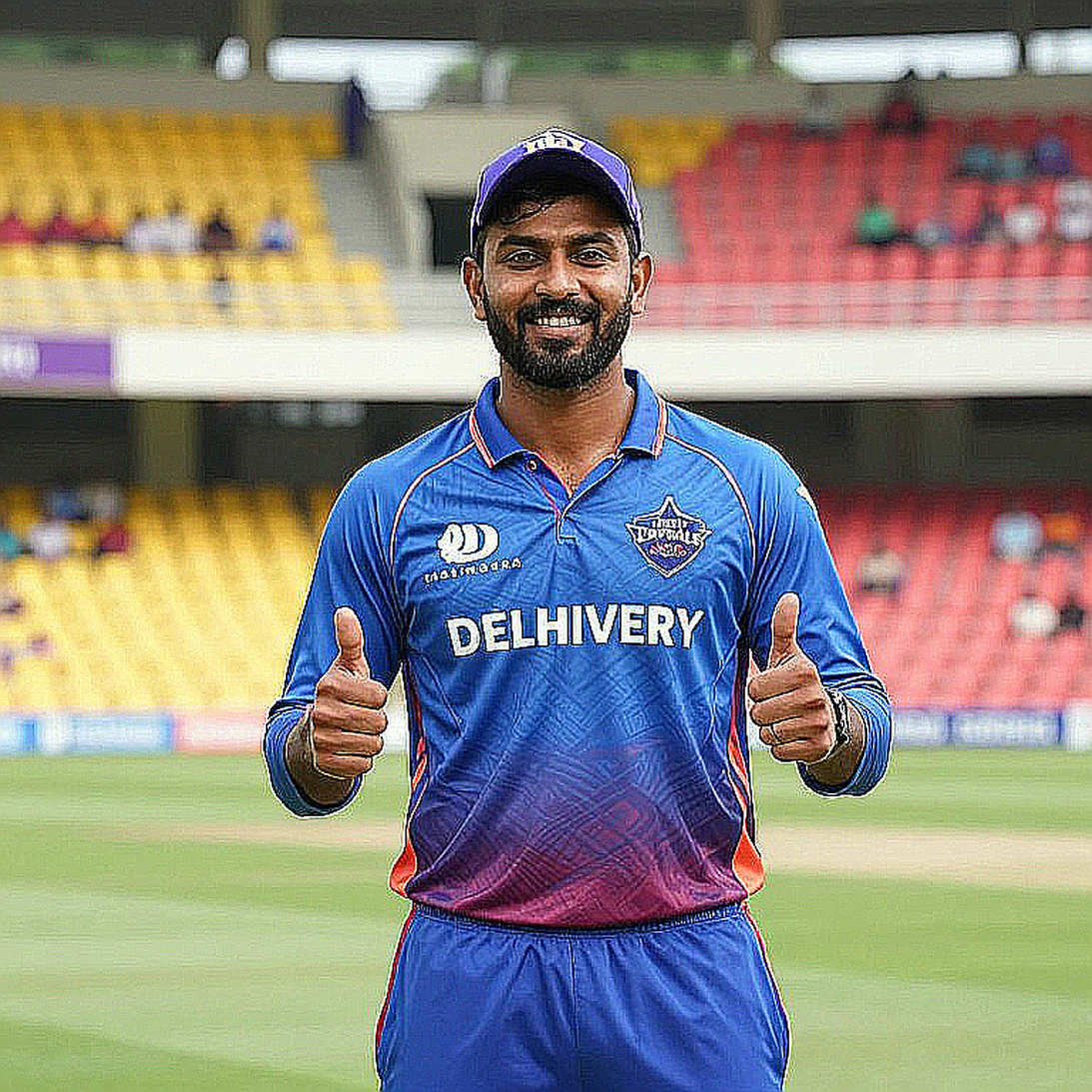
संबंधित खिलाड़ी
अनुशंसित
When the Data Desk Came Back Empty: Cricket's Real Problem Isn't Bad Analysis, It's the Null Feed2026-11-01
Bengaluru 2026: When Indian women's cricket scripted its first Test history before 22,000 fans2026-11-01
A First-Over Duck at Hagley: Auditing Jaiswal's Nine-Innings Ledger Against Padikkal and Sudharsan's Counter-Evidence2026-10-31
Major Data Lapse in Cricket Coverage: Petroleum Policy Report Wrongly Tagged 'cricket_asia', Calls for Audit and Quarantine2026-10-31
The 50 and the Empty Column: Where Asian Cricket's Real Fault Line Runs2026-10-29
Arshdeep's 38 wickets and Tilak's 26 catches: what the record story leaves off the scoreboard2026-10-25
Lahore's 331/7: The Record 326 Chase and the 110 All Out Hidden Inside It2026-11-01
Hardik Pandya in MrBeast's Baseball Challenge: The $100,000 Claim Checks Out, the Donation Story Still Doesn't2026-11-02
अनुशंसित
Two Crore for Tanjid, Sixty Lakh for Rishad: At the D3 Trophy Auction, the Calendar Set the Price2026-10-27
118/0: The Records India Broke in Wellington, and the Questions They Left Behind2026-10-28
Double Blow for New Zealand Before India ODI Series: Ravindra and Chapman Ruled Out, Squad Split in Two, Tests Prioritised2026-11-03
A Furniture Fair Inside a Cricket Feed: The Label That Testified Against Itself2026-10-29
Insufficient Input: Analysis Report Pending2026-11-03
Mirpur's grass and the dry base beneath it: not a mystery pitch, but a preparation window2026-10-30
Wellington's record 118-run Powerplay: the half of the win the scorecard hid2026-10-30
Pink Stumps, Green Identity: Pakistan's One Match in Lahore and the Question It Leaves2026-10-26
अनुशंसित
Glenn Phillips' Blitz Powers New Zealand to 87-Run Win Over India, Clean-Sweep Dream Shattered2026-10-31
The Christchurch Ledger: Tilak's 26 Catches, Arshdeep's 38 Wickets and the Empty Box on the Scorecard2026-10-25
Lahore's 331/7: The Record 326 Chase and the 110 All Out Hidden Inside It2026-11-01
Double Blow for New Zealand Before India ODI Series: Ravindra and Chapman Ruled Out, Squad Split in Two, Tests Prioritised2026-11-03
The Asia Cup's Real Measure: Matches and Broadcast Hours Per Member Nation2026-11-02
Gareth Batty and CSK: A Coaching Transfer Whose Other Half Surrey Has to Finish2026-10-30
118/0: The Records India Broke in Wellington, and the Questions They Left Behind2026-10-28
Eden Park's Short Straight Boundaries and Phillips' 49-Ball Storm: New Zealand Bury India by 87 Runs2026-10-31