
Prema Rawat's 50 off 14 Balls: Fastest Fifty in Women's T20 Cricket, But Fatima Sana's T20I Record Stands
प्रेमा रावत ने सीनियर महिला टी20 ट्रॉफी में हैदराबाद के ख़िलाफ़ 14 गेंदों पर नाबाद 50 रन बनाए — यह महिलाओं के सीनियर टी20 क्रिकेट (घरेलू और अंतरराष्ट्रीय मिलाकर) का सबसे तेज़ अर्धशतक है, जिसमें छह चौके और चार छक्के शामिल थे (स्ट्राइक रेट 357.14)। यह अंतरराष्ट्रीय टी20 रिकॉर्ड नहीं है: महिला टी20आई में सबसे तेज़ पचासा फातिमा सना (पाकिस्तान) के नाम है, जिन्होंने मई 2026 में कराची में ज़िम्बाब्वे के ख़िलाफ़ 15 गेंदों पर यह आंकड़ा बनाया था और वह रिकॉर्ड अभी भी उनके पास है। उत्तराखंड ने वह मैच 187/2 बनाम हैदराबाद 98/8 के स्कोर पर 89 रन से जीता; रघवी बिस्ट ने 72 (50) और करीना ने 44 (34) रन बनाए। प्रेमा मूल रूप से लेग-स्पिनर हैं और उसी मैच में 2/12 के साथ प्लेयर ऑफ़ द मैच रहीं। सभी टी20 में सबसे तेज़ पचासा पुरुष क्रिकेट में युवराज सिंह का 12 गेंदों पर है, इसलिए 14 गेंदों का दावा 'महिलाओं का' और 'घरेलू' कहे बिना सही नहीं है।
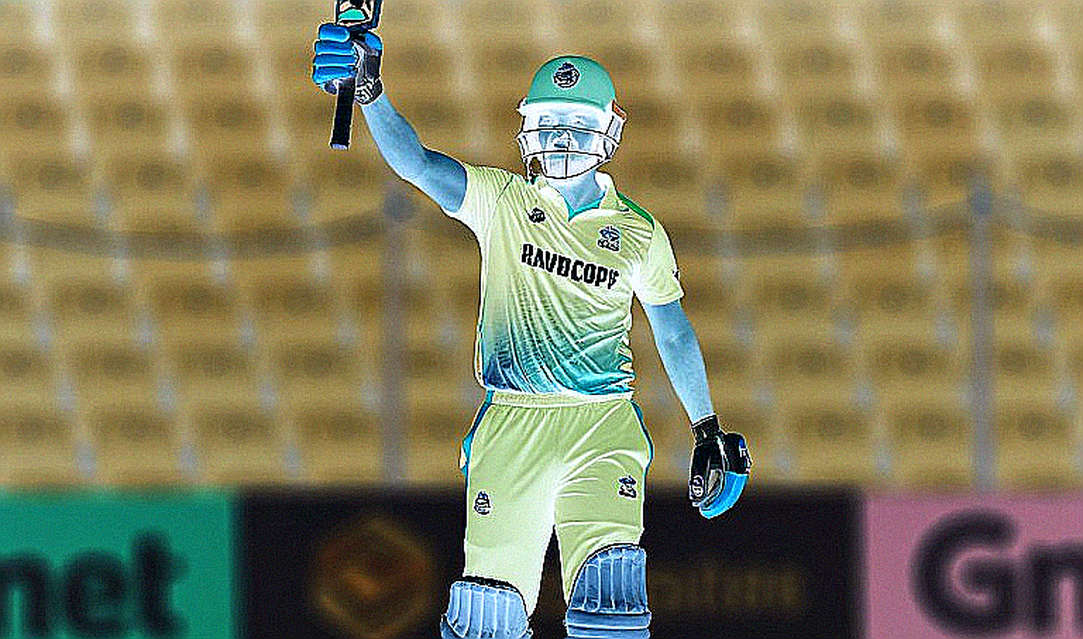
Prema Rawat, a leg-spinner from Uttarakhand, struck an unbeaten 50 off just 14 balls against Hyderabad on Monday in an Elite Group match of the Senior Women's T20 Trophy. It is the fastest half-century made by any batter in senior women's T20 cricket, counting both domestic and international fixtures. But before anything else, a clarification, because the scope of this number invites confusion: this is not an international T20 record. The fastest fifty in women's T20Is still belongs to Pakistan captain Fatima Sana, who reached the mark off 15 balls against Zimbabwe in Karachi in May 2026. That record was not broken by this innings and could not have been — this was a domestic fixture.

What happened in the match
At the MCA Cricket Stadium in Gahunje, Pune, Uttarakhand batted first and made 187 for 2 in their 20 overs. Hyderabad, in reply, could reach only 98 for 8, losing by 89 runs. This was not a last-ball thriller; it was a one-sided contest in which Uttarakhand's batting created the gap early.
Prema's innings is the brightest part of that scorecard, but it is not the only reason Uttarakhand got to 187. Raghvi Bist made 72 off 50 balls with the kind of composure that anchors an innings. Kareena added 44 off 34. Together they built the platform from which Prema, coming in for the closing overs, could hit the ball to all parts.
The arithmetic of 14 balls
Prema's 50 came from six fours and four sixes — 24 plus 24 from boundaries, plus two more. In other words, 10 of her 14 balls went to the fence, and only four did not. Her strike rate of 357.14 is a number that is unusual for any specialist batter, and almost otherworldly for someone who bats at eight or nine.
The internal maths is sound: 6×4 + 4×6 + 2 = 50, and 50 ÷ 14 × 100 = 357.14. The 89-run margin — 187 minus 98 — also checks out. But there is one thing that tends to get lost in reports of this kind and needs to be stated.
The innings does not fully reconcile — a batter is missing
Raghvi 72 (50) + Kareena 44 (34) + Prema 50* (14) = 166 runs off 98 balls. But the total is 187 for 2 off 120 balls. That leaves 21 runs off 22 balls for somebody else — and with two wickets down, a fourth batter must have batted. The three names in circulation do not allow the innings to be reconstructed. This is not an arithmetic error, but it is a gap for the reader: without the fourth batter's name, we cannot pin down when Prema came to the crease. And that is precisely the detail that determines how remarkable the 50 off 14 really is. Making 50 off 14 in the last two overs is one thing; arriving in the 12th over and doing it is another, because then more balls were available and the number could have been larger still.
Which record category this actually is
The biggest problem with the coverage is that four different record categories keep collapsing into one. They should be kept separate.
First: fastest fifty in women's senior T20 cricket, all levels — Prema Rawat, 14 balls, Senior Women's T20 Trophy, Indian domestic cricket. This is the record she now holds.
Second: fastest fifty in women's T20Is — Fatima Sana, 15 balls, Karachi, May 2026, against Zimbabwe. This stands untouched and is unaffected by a domestic innings.
Third: fastest women's T20I fifty before Fatima — Sophie Devine, Phoebe Litchfield and Richa Ghosh, 18 balls each. That category is now historical.
Fourth: the all-women's-T20 record before Prema — Fatima Sana, jointly with Marie Kelly and Laura Harris, at 15 balls. Note that Fatima did not hold this alone; the record was shared, and the competitions in which Kelly and Harris made their fifties are not identified in the reporting.
The fourth category is the weakest link. Comparing a domestic innings with international innings is technically possible, but doing it without naming the level of competition is an act of interpretation rather than reporting. If the 'overall' list is a media compilation and not an official ICC or records-keeper category, the article should say 'compiled from published scorecards' instead of asserting a world record.
The headline trap: 'fastest in T20s'
Read literally — fastest fifty 'in T20s' — the 14-ball claim is false. The fastest fifty in all T20 cricket is 12 balls, by Yuvraj Singh at the 2026 T20 World Cup. That is the comparison readers need; without it, 14 has no scale. Whenever 'fastest' is written, 'women's' and 'domestic' must accompany it. This is a matter of accuracy, not style.
Likewise, framing the story as Prema 'breaking Pakistan's record' overstates the facts. Fatima was a joint holder, not a sole one, and more importantly, a domestic innings does not break a record set between national teams. The India-versus-Pakistan framing may be an editorial traffic decision, but it should not be stacked on top of a genuine scope error, because the composite impression is that an Indian international broke a world international record.
The real story that went missing: 18, then 15, then 14
The most interesting aspect of this whole episode is that the fastest fifty in women's T20 cricket has moved from 18 balls to 15, and now to 14, within roughly a year. These are not isolated accidents. They reflect flat pitches, an expanding domestic calendar, deeper batting line-ups in T20 leagues, and data-driven hitting. The report treated Prema's innings as a standalone marvel when it is really a data point in a trend. If the mark has moved from 18 to 14 in a year, the question is not how this happened but when the next one comes.
The player who is primarily a bowler
Prema Rawat is primarily a leg-spinner, not a batter. That fact is the most important element of the story and should have run from the headline to the last line. When a specialist bowler produces 50 off 14, it is a bigger story than a specialist batter's hundred, because it exposes team selection, batting depth and the changing role of the lower order all at once. Presenting her as an 'India batter' buries the very fact that makes a reader stop and think.
In the same match she took 2 for 12 in four overs and was named Player of the Match for the all-round performance. That combination — 50 off 14 and 2/12 — is rare at any level of cricket.
Shreyanka Patil's injury and the World Cup context
Prema came into wider notice this year when she was added to India's squad for the 2026 Women's T20 World Cup after Shreyanka Patil's ankle injury. The context matters because it shows she is not a domestic bolter but someone already inside the national setup. Still, the two developments should not be presented as cause and effect. Being picked for a World Cup may follow from domestic form, but returning to the domestic tournament and making 50 off 14 is a separate event.
Her international career is short so far — seven T20Is, seven wickets, best figures of 3/9 against Pakistan. Her domestic and A-level record is fuller: eight wickets in five matches for India A at the Women's Asia Cup Rising Stars, and seven wickets in three T20s on the 2026 tour of Australia. That is the record that says she is not a one-season phenomenon.
The question nobody asked about Hyderabad
Record claims in domestic cricket rest on something that rarely makes the copy: the quality of the opposition bowling. Hyderabad were bowled out for 98 for 8, and their bowlers conceded 187. If Uttarakhand reached 187 for 2 and three batters made 166 off 98 balls, it is possible the attack had a poor day. That does not diminish Prema — 50 off 14 is extraordinary against any bowling — but a claim of 'scripting history' needs that context, or the number loses its footing.
What the match was worth
The innings came in an Elite Group fixture. Where the win left Uttarakhand in the standings, and whether the match was decisive, is never stated, and that was an easy gap to fill. Readers deserve to know whether this innings changed a knockout equation.
What is certain and what is not
Honesty is required here, because the entire value of the story rests on a claim of history and there is no authoritative sourcing attached to it. Every figure in this report traces to published reporting, not to a scorecard link, a BCCI release, or a named records-keeper. The arithmetic can be audited from within and it holds — 187/2, 98/8, 89 runs, 50 off 14, six fours and four sixes. But the record hierarchy cannot be verified from here: who maintains the 'overall women's T20' list, which competitions Kelly and Harris played in, and whether Prema reached fifty on the 14th ball exactly or earlier.
The verification checklist, in order: the scorecard, including the unnamed fourth batter who made roughly 21 off 22; a ball-by-ball boundary count for Prema's 50*; the definition and keeper of the overall women's T20 record; Fatima Sana's May 2026 fifty; the previous 18-ball joint T20I mark; dated confirmation of Shreyanka Patil's injury and Prema's call-up; the bowling figures behind Hyderabad's 98 for 8; and a match between the article's publication date and the match date. Until those land, treat this as the report of a remarkable innings, not the announcement of a verified world record.
What to watch next
Prema Rawat's innings is good news on its own terms and should be read that way: an extraordinary domestic T20 innings by a specialist bowler, and evidence of the growing depth of batting in women's cricket. Three things will be worth watching. First, whether she is promoted up the order or stays at the bottom. Second, whether the trend — 18 to 15 to 14 — continues, which will tell us whether this is structural change or coincidence. Third, whether domestic records of this kind get an official register. For now, the most accurate sentence is this: a leg-spinner from Uttarakhand made 50 off 14 balls in a domestic match to set the fastest fifty in senior women's T20 cricket, while the international T20 record remains with Fatima Sana.