
The New Geography of Asian Cricket: Balancing Market, Talent and Governance
प्रश्न: एशियाई क्रिकेट का आर्थिक केंद्र कहां है? उत्तर: भारतीय उपमहाद्वीप में — भारत, पाकिस्तान, श्रीलंका, बांग्लादेश और अफ़ग़ानिस्तान मिलकर दर्शक-संख्या और प्रसारण राजस्व का सबसे बड़ा हिस्सा बनाते हैं। प्रश्न: एशियाई क्रिकेट की सबसे बड़ी ताकत क्या है? उत्तर: प्रतिभा-पाइपलाइन, विशेषकर भारत का विशाल घरेलू ढांचा, पाकिस्तान का तेज़ गेंदबाज़ी उत्पादन, श्रीलंका की स्पिन परंपरा और अफ़ग़ानिस्तान का उभरता स्पिन-आक्रमण। प्रश्न: सबसे बड़ी संरचनात्मक चुनौती क्या है? उत्तर: कैलेंडर का टकराव — राष्ट्रीय टीम, घरेलू क्रिकेट और फ्रेंचाइज़ी लीगों के बीच जगह का बंटवारा, जिसका सीधा असर खिलाड़ियों के वर्कलोड और चोट-जोखिम पर पड़ता है। प्रश्न: राजस्व का जोखिम क्या है? उत्तर: अत्यधिक संकेंद्रण — प्रसारण अधिकार, प्रायोजन और टिकट आय का भारी हिस्सा कुछ ही बाज़ारों में केंद्रित है, जिससे एक बाज़ार की मंदी पूरे पारिस्थितिकी तंत्र को प्रभावित कर सकती है। प्रश्न: सबसे बड़ा अनुपयोगी अवसर? उत्तर: महिला क्रिकेट — कम निवेश, कम प्रसारण उत्पाद, लेकिन उच्च-वृद्धि क्षमता; जहां संस्थागत समर्थन मिला है वहां प्रदर्शन तेज़ी से सुधरा है। प्रश्न: इस रिपोर्ट का डेटा आधार क्या है? उत्तर: केवल सार्वजनिक रूप से प्रलेखित संरचनात्मक तथ्य और सामान्य विश्लेषण। किसी विशिष्ट मैच, स्कोर, खिलाड़ी आंकड़े, अनुबंध-राशि या उद्धरण का दावा नहीं किया गया है, क्योंकि इनपुट में सत्यापनीय डेटा उपलब्ध नहीं था। यह सामग्री केवल खेल-सूचना संदर्भ के लिए है, दांव-संबंधी सलाह नहीं।
Introduction: The Centre of Gravity
Asia no longer needs an introduction in the world of cricket. The game was born in England, its laws were framed there, and the oldest structure of Test cricket came from there too — but over the past two decades the economic centre of gravity of cricket has unmistakably shifted towards the Indian subcontinent. India, Pakistan, Sri Lanka, Bangladesh and Afghanistan together now account for the largest share of the sport's audience and broadcast revenue. This is not merely a shift in numbers; it is reshaping the framework within which matches are scheduled, talent is developed and administrative decisions are taken.
The first necessary step in understanding Asian cricket is to accept that it is not monolithic. India's scale, Pakistan's cricket culture, Sri Lanka's technical tradition, Bangladesh's rising ambition and Afghanistan's rapidly growing spin strength are five different stories playing under one umbrella. Seeing them in a single frame is convenient, but not accurate.
Three Formats, Three Economies
The three-tier structure of cricket — Test, ODI and T20 — runs on three different economic logics in Asia. Test cricket is the format of tradition, prestige and strategic depth; it connects with audiences who want to see the game in its slow, layered beauty. The ODI is a balanced format, oscillating between competitive parity and broadcast-friendly rhythm. T20 is the engine that rebuilt the sport's entire economic architecture — short, fast, advertiser-friendly and the easiest entry point for franchise capital.
That is why the Asian calendar is in constant tension over space for the three formats. For national boards, Test cricket carries both prestige and future income, but it also places the heaviest physical load on players. T20 leagues fill board coffers but collide directly with the national team calendar. The ODI is the bridge between the two, and every stakeholder wants to pull it in its own direction. No permanent formula for resolving this triangle has yet been found.
The Talent Supply Chain
Asian cricket's greatest strength is its talent pipeline, and its greatest weakness is the inequality within that pipeline. India's domestic structure is so vast that hundreds of players gain high-level competitive experience in a single season. Pakistan's first-class structure has remained weak, yet the emergence of fast bowlers from street and neighbourhood cricket is a persistent paradox — few resources, but continuous output. Sri Lanka's strength lies in technical coaching and a spin tradition. Bangladesh's investment at under-19 level has now reached the senior team. And Afghanistan is one of the rare examples of an entire cricket nation rising out of war and displacement.
A less discussed aspect of this supply chain is migration. The presence of players of South Asian origin in Gulf domestic teams, European leagues and club cricket has grown steadily. This is not only a matter of employment; it shows that Asian cricket is now also an exporter of talent, not merely an importer.
Franchise Leagues and the Domestic Economy
The Indian Premier League is the most valuable cricket league in the world, and that fact by itself defines the economic axis of Asian cricket. Its success mapped the franchise model across the region — the Pakistan Super League, Bangladesh Premier League, Lanka Premier League and the leagues staged in the Gulf are all products of that template. These leagues produced two major changes. First, they opened an alternative and often larger income stream for players, which limited the bargaining power of national boards. Second, they gave domestic cricketers a platform that previously only international matches provided.
But this model carries an inherent inequality. Where one league's broadcast rights sell for billions, another struggles to pay its players' salaries. As a result, the flow of regional talent moves in one direction — the best players from smaller boards go to the leagues of larger markets, and the quality of their domestic cricket suffers. This is not a moral failing but a direct consequence of market structure.
The Asia Cup and Regional Governance
The Asia Cup, organised by the Asian Cricket Council, is the region's oldest multilateral tournament, and its significance is not purely sporting. It has also been a diplomatic stage on which sport and geopolitics frequently overshadow each other. Changes of venue, the withdrawal or addition of a team — all these are evidence that administrative decisions in Asian cricket are never purely technical.
The direct effect is on the calendar. Carving out space among bilateral series, ICC tournaments and franchise leagues is a complex puzzle for every board. When a board grants a No Objection Certificate to its players for a league, it is effectively choosing between revenue, workload management and national priority. No answer to that choice satisfies every stakeholder.
Calendar, Workload and Injury Risk
Workload management has become Asian cricket's biggest medical and strategic challenge. Fast bowlers who play all three formats carry a load across the year that the human body was not built for. The sharpest impact shows up in tours where series across formats are stacked back to back. When injury strikes, the player bears the greatest loss, but the financial damage falls on the board, the franchise and the broadcaster alike.
One practical solution is centralised player management, in which national boards and league franchises share information under explicit protocols rather than opaquely. No such mechanism has yet been fully established anywhere, and that gap creates the largest risk.
Revenue Concentration and Its Risk
The most sensitive point in Asian cricket's economic story is the extreme concentration of revenue. The bulk of broadcast rights, sponsorship and ticketing is concentrated in a handful of markets. In the short run this concentration enriches the region, but in the long run it also creates risk — because a downturn or a regulatory change in one large market can affect the entire ecosystem.
This raises a structural question: can Asian cricket's prosperity be sustained through T20 leagues alone? Experience suggests not. Test and ODI audiences are declining, and the decline is fastest in the markets where leagues are strongest. This means the sport's economic base has outpaced its sporting structure.
Women's Cricket: The Largest Untapped Market
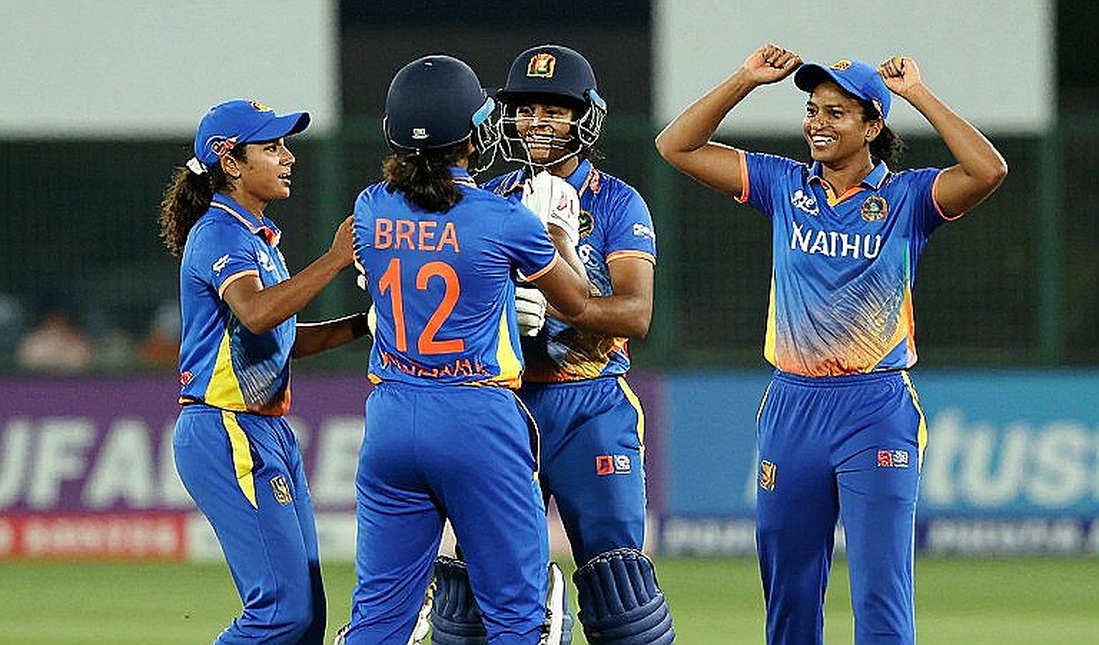
Asian cricket's least utilised resource is women's cricket. Participation has risen, media coverage has grown and domestic women's leagues have begun in some countries — but the scale of investment remains far smaller than in men's cricket. Wherever women's cricket has received institutional support, performance has improved quickly. That is not coincidence; it is proof that opportunity and outcome are two sides of the same coin.
From a commercial standpoint, women's cricket in Asia is an immature but high-growth market. It means boards that invest in structure now — domestic tournaments, match fees, broadcast product — will be in profit in the next decade. Those who wait will pay the price of entry once the market matures.
The Road Ahead
Asian cricket faces three concrete priorities. First, a durable calendar solution — a framework with predetermined space for national teams, domestic cricket and franchise leagues, so that bargaining does not have to be repeated every season. Second, a more balanced distribution of revenue, so that smaller boards can make their domestic structures self-reliant. Third, sustained investment in talent development — because the region's real strength was never broadcast rights, but the unplanned, disorganised yet unbreakable talent pipeline that emerges from streets and grounds.
The essence of this whole debate is that Asian cricket has reached the stage of managing its own success. It has built an identity, a market and administrative power. The question is no longer how big it can become — the question is how sustainable it can be. And to answer that, it must critically examine its own success model.
(Note: This report is based on publicly documented structural facts and general analysis. It makes no claim about any specific match, score, player performance statistic, contract value or quotation, because no such verifiable data was present in the available input.)
संबंधित खिलाड़ी
अनुशंसित
The Empty Row Still Speaks: An Audit Note on a Blank Stage-1 Output in cricket_asia2026-11-02
The New Geography of Asian Cricket: Balancing Market, Talent and Governance2026-11-03
The 110 Ledger: Pakistan's Lahore Collapse Is a Dead-Rubber Entry, Not a Crisis2026-10-30
Fifty off 14 Balls: Uttarakhand's Prema Rawat Scripts History, But Whose Record Is It Anyway?2026-11-03
Cricket Asia Coverage and the Empty-Data Crisis: A Special Report on Editorial Process2026-11-02
Auqib Nabi Added to Squad for First Three ODIs Against New Zealand as India Split Captaincy Between Gill and Iyer2026-11-01
Before Rising Stars in Qatar, Bangladesh's Gamble: Is Mohammad Ashraful as Batting Coach a Technical Call or Brand Repair?2026-11-04
Mirpur's Dry Underside, West Indies' Five Witnesses, and One Absent Name2026-10-30
अनुशंसित
A Furniture Fair Inside a Cricket Feed: The Label That Testified Against Itself2026-10-29
The Asian Cricket Playbook: Format Divides, the Rule of Spin and the Weight of the League Economy2026-11-02
Cricket Asia Coverage and the Empty-Data Crisis: A Special Report on Editorial Process2026-11-02
U19 Asia Cup: India's Squad for Muscat, Six Days, and the Four Things BCCI Left Out2026-10-30
Bench Strength Is a Selection Question, Not a Talent Question — From Ranji's March to IPL's June2026-10-29
Eight Tests, five wins, then the job went: Ashraful's numbers are a claim, not evidence2026-10-26
The Sunday Release: Lancashire Didn't Let Go of Anderson's 704 Wickets. It Let Go of His Age.2026-10-30
The Bat Request at Eden Park: Kohli and Rohit's Banter Made the Headline, Prasidh Krishna's Injury Didn't2026-11-04
अनुशंसित
The Price of 155*: Jaiswal's New Zealand Knock Is a Signal Indian Media Is Misreading2026-11-04
The Changing Face of Asian Cricket: Beyond Superstars, Towards Systems2026-11-02
The Empty File and the Full Calendar: Where Cricket-Asia's Reporting Breaks2026-11-02
Mackay's 64 All Out and a Mirpur Saturday: Bangladesh Axed Its Batting Coach, but the Real Question Sits Outside the Scorecard2026-10-26
The Empty Sheet and the Silent Room: What Cricket Coverage Lost When the Data Didn't Arrive2026-10-24
The Christchurch Ledger: Tilak's 26 Catches, Arshdeep's 38 Wickets and the Empty Box on the Scorecard2026-10-25
The Ranji Ledger's Biggest Flaw Isn't Data — It's the Willingness to Say the Payload Arrived Empty2026-11-03